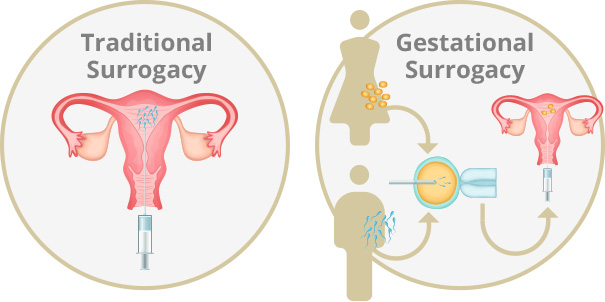
The gestational carrier surrogacy pathway is a viable option for heterosexual couples, same-sex couples, and single parents unable to get pregnant or carry children of their own.
Once the medical, psychological and legal components are in place, the intended parents undergo ‘in-vitro fertilization‘ and the resulting embryo(s) are transferred into the carrier’s uterus. After birth, the surrogate then gives the child to the intended parents.
At Genesis, we pride ourselves in providing a thorough screening process, commitment to safety, and full disclosure of the risks and successes of surrogacy. Intended parents require a legal contract between themselves and the potential surrogate. This legal contract is arranged privately. A counselling session is also required for the intended parents and the surrogate prior to starting treatment. Once these medical, legal and counselling components are complete we can start the process.
In what cases would a gestational carrier be needed?
A woman who has healthy ovaries but cannot carry a pregnancy for one of the following reasons would require a gestational carrier:
- Absent uterus (e.g. after hysterectomy)
- Uterine abnormalities (e.g. severe scarring)
- Medical reasons that make pregnancy unsafe
This surrogacy pathway may also be a viable option for single parents and LGBTQ couples.
What to know about finding a gestational carrier surrogate:
Under the Assisted Human Reproduction Technology Act passed in 2004, a surrogate mother may be reimbursed for expenses such as prenatal vitamins, costs of traveling to the doctor, and loss of income. However, she cannot receive any sort of wage for carrying the child.
Commercial surrogacy is a form of surrogacy in which a surrogate or gestational carrier is paid. This procedure is legal in several countries, but not in Canada. Consequently there is no list of surrogates available at Genesis. By law we cannot put couples needing surrogacy in contact with potential surrogates; rather, the couple must find a surrogate themselves.
To be a surrogate a woman must be healthy, have a ‘BMI’ <= 30 kg/m2), be under age 43 and have had at least one healthy, term pregnancy.
Indications:
- Absent uterus (e.g. after hysterectomy)
- Uterine abnormalities (e.g. severe scarring)
- Medical reasons that make pregnancy unsafe
- After a after hysterectomy that includes removal of the ovaries
- Previous radiation or other treatment that has damaged the uterus and ovaries